

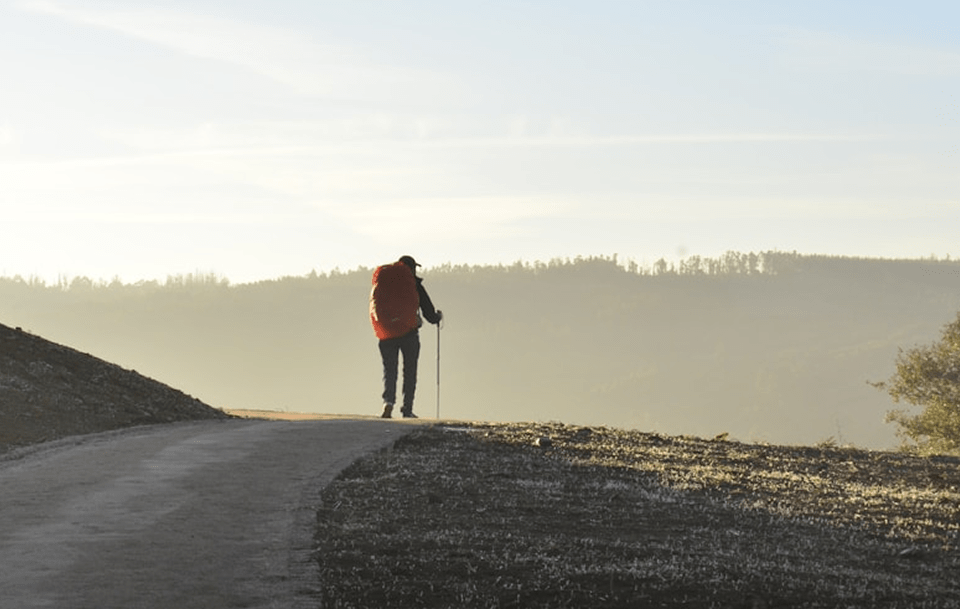
Have you walked many kilometers today on the Camino de Santiago, or are you simply ending the day with heavy legs? Muscle fatigue is not only uncomfortable—if left unattended, it can turn into overload, stiffness, or even small injuries. The good news is that with just a few minutes of simple stretches, you can give your body the rest and recovery it needs. At Beganur Massages, we believe in self-care as a pillar of well-being, which is why we are sharing 5 effective stretches that are easy to do anywhere and supported by scientific evidence for their role in muscle recovery.
1. Calf Stretch Against the Wall
Why do it: The calves are among the muscles that suffer the most during long walks. Keeping them flexible helps prevent overload and cramps.
How to do it:
- Place your hands against a wall.
- Step one leg back with the heel on the ground and the other leg forward, bent.
- Lean your body gently forward until you feel the stretch in the calf.
- Hold for 20–30 seconds and switch legs.
Scientific fact: Physiotherapy studies have shown that static stretching after exercise reduces perceived fatigue and improves joint mobility.
2. Standing Quadriceps Stretch
Why do it: The quadriceps (front of the thigh) absorb much of the impact when walking and climbing hills.
How to do it:
- Stand and hold onto a wall or post for balance.
- Bend one leg backward and grab the ankle with your hand.
- Gently bring the heel toward the glute while keeping the knee pointing down.
- Hold for 20–30 seconds and switch legs.
3. Seated Hamstring Stretch
Why do it: The hamstrings (back of the thighs) work hard during long-distance walks, especially when going downhill.
How to do it:
- Sit on the floor with one leg extended and the other bent.
- Lean forward with your back straight, trying to reach the foot of the extended leg.
- Hold for 20–30 seconds without forcing it.
Tip: Do not bounce—the stretch should be gradual and controlled.
4. Glute Stretch Lying Down
Why do it: The glutes are key for walking stability and often accumulate tension.
How to do it:
- Lie on your back.
- Cross one ankle over the opposite knee.
- Bring the lower leg toward your chest, holding it with your hands.
- Hold for 20–30 seconds and switch sides.
Fun fact: This stretch is also known as the “figure four” and is often used in physiotherapy programs to prevent lower back pain.
5. Lower Back and Hip Stretch
Why do it: The lower back and hips carry much of the load from both the backpack and the walk itself.
How to do it:
- Lie on your back and bend both knees.
- Gently bring them toward your chest and hug them.
- Hold for 20–30 seconds while breathing deeply.
Extra benefit: This exercise also helps relax the nervous system and promotes a sense of rest.
Conclusion
Spending just 10 minutes at the end of your stage or at the close of your day is enough to feel the difference: less stiffness, better recovery, and more energy to keep going. And if you’d like to complement this self-care, at Beganur Massages in Santiago de Compostela we offer specialized massages for pilgrims and anyone with muscle fatigue, boosting recovery and relieving accumulated tension. Give your body the rest it deserves.